
End-to-End AI integration without fragmentation
We diagnose how work moves, design the AI-enabled operating model, and build the workflows, agents, integrations, and controls that make AI useful in daily execution.
Problem
AI is everywhere but daily work stays the same.
Teams try new AI tools, but outputs don’t flow into real processes. Context switching increases. Privacy blocks the best use cases.
AI lives in
Separate
tools and tabs
Too many
Interfaces
create friction and missed handovers
Knowledge
Scatter
across docs, inboxes, and systems
Manual
Coordination
becomes the bottleneck
Why it fails
Are you getting the returns AI promised?
AI does not fail because teams lack tools. It fails when tools sit outside the operating model: disconnected from workflows, ownership, governance, and the systems where work actually moves.
Where the value leaks
Observable symptoms that AI is present in the business, but not yet part of how work runs.
Wasted time and duplicate work
Teams repeat context gathering, handovers, and manual updates across disconnected tools.
Slow execution and missed opportunities
Decisions wait on coordination instead of moving through a reliable operating system.
Scaling requires more people
Capacity grows through extra headcount because workflows are not structurally improved.
AI remains experimental
Useful outputs stay outside daily execution, governance, and operational ownership.
Operating lifecycle
From AI strategy to governed execution
MadSar covers the full path from operational diagnosis to implementation, production governance, and continuous improvement.
AI Strategy & Operating Model
We map how work, decisions, and information move through the organization, then define where AI should be built into the operating model first.
Explore AI Strategy & Operating ModelWorkflow & Agent Implementation
We build the workflows, agents, prompts, and integrations that connect AI to the systems and handovers where execution actually happens.
Explore Workflow & Agent ImplementationMonitoring & Governance
We put controls, visibility, and ownership around AI workflows so they remain reliable, secure, and accountable in production.
Explore Monitoring & GovernanceContinuous Optimization
We refine the operating system as teams, tools, and requirements change, so AI keeps improving the way work gets done.
Explore Continuous OptimizationEngagement approach
How we turn operational insight into working systems
The work starts close to the business process, then moves into implementation, governance, and continuous improvement without losing operational context.
Map the real workflow
We work with the people closest to execution to understand handovers, decisions, systems, and the friction that slows work down.
Build the first operating layer
We implement the workflows, agents, prompts, and integrations that connect AI to an actual business process, not a detached experiment.
Stabilize and improve
We monitor the system in use, tighten governance, and refine it as teams, tools, and requirements change.
Outcomes
What changes when AI becomes part of operations
Bandwidth
Teams handle more work without adding coordination overhead or duplicating effort across tools.
Speed
Decisions and handovers move faster because systems, context, and ownership are connected.
Capacity
Operational knowledge becomes reusable, so expertise scales beyond individual inboxes, documents, and habits.
Control
AI workflows are visible, governed, and accountable instead of isolated experiments with unclear ownership.
Insights
AI integration insights
Articles, implementation updates, and practical guidance on building AI into real workflows, systems, and governance.

How to Run a Recoverable n8n AI Workflow with Queue Mode, Error Routing, and Safe PostgreSQL Writes
Configure queue workers, retained execution evidence, error routing, idempotent PostgreSQL writes, verification and controlled recovery for an n8n AI workflow.

How to set up an n8n error workflow for failed AI automations
Configure an n8n error workflow that sends redacted, minimal-data failure alerts, preserves useful investigation context in n8n and can be verified safely.
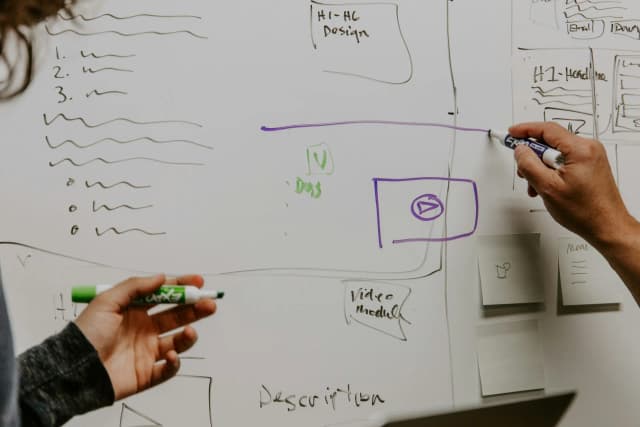
Designing AI operations without noise
How to make AI part of the operating model without creating another disconnected layer of tools, dashboards, and coordination work.
Subscribe
Receive selected updates on AI operations, implementation patterns, and new offerings.
Client proof
What partners say after implementation
The work is judged by whether teams can use it in real operations, not by how convincing the strategy sounds.
Context
“Our team was slowed down by scattered information until MadSar stepped in. They analyzed our specific needs and built a solution that centralized our workflow and boosted our capacity immediately. The collaboration was excellent, and the results speak for themselves. I recommend MadSar to anyone needing a real efficiency upgrade.”

Client
Gabriel Bergmann
Head of Operations, HYGH
Engagement
Take the first step
Send a short note about what you want to improve. We will review the context and come back with a focused first conversation around the most useful next step.
Contact
Tell us what you want to improve.
A few sentences are enough. We will use them to prepare the first conversation.